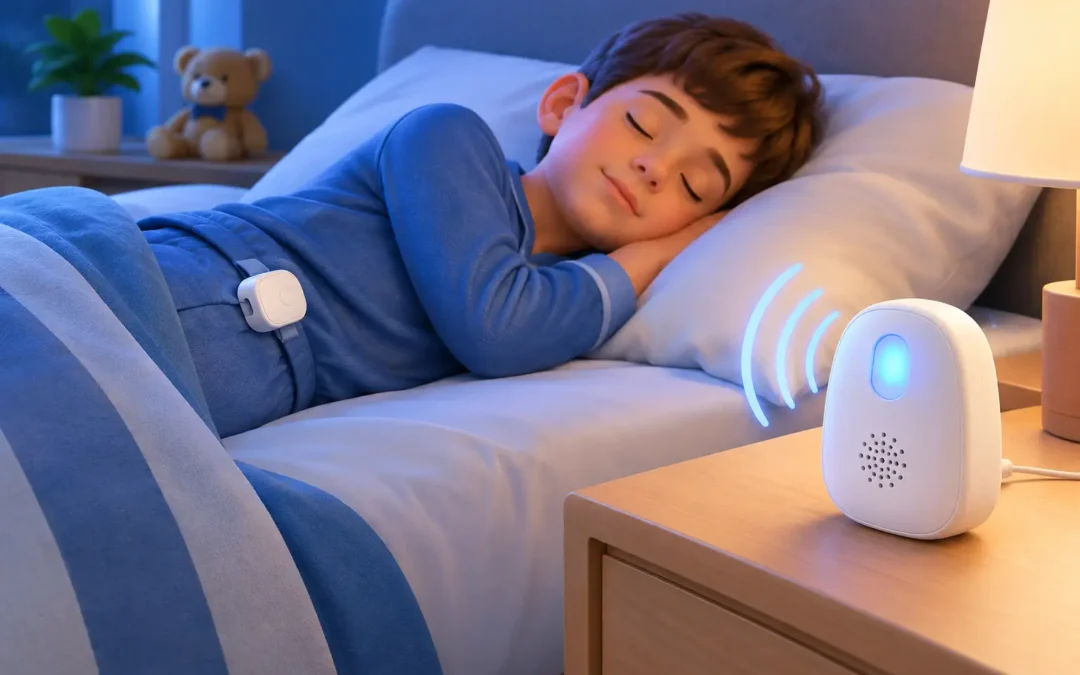
A child can sleep through a thunderstorm, a barking dog and a parent calling their name – then wake upset after a wet bed. That is why finding the best bedwetting alarm for deep sleepers is not simply about choosing the loudest device. It is about choosing a system that detects wetting promptly, helps the child learn to wake, and gives the whole family a calm, consistent plan.
Bedwetting is common and manageable. Deep sleep does not mean a child is being difficult or that treatment cannot work. It means the alarm, the sensor and the bedtime routine need to work together, with support from a parent or carer in the early stages.
Why deep sleepers need more than a loud alarm
Alarm therapy works by building a connection between the feeling of a full bladder, waking up and going to the toilet. Over time, many children begin to wake before they wet, or their bladder learns to hold more urine overnight. This learning takes repetition. It is not an overnight fix.
For a deep sleeper, an alarm may sound without fully waking them at first. They may turn over, silence it unknowingly or sleep through it entirely. A loud alarm alone can also wake everyone else in the house while the child remains asleep. That can be frustrating, but it is a common starting point rather than a sign the approach has failed.
The most suitable alarm is one that creates a reliable sequence: the sensor identifies the first signs of moisture, the alert begins immediately, an adult helps the child wake fully when needed, and the child finishes the routine by going to the toilet and resetting the system. Consistency is what turns an alert into a learned response.
Features to look for in the best bedwetting alarm for deep sleepers
Early, dependable moisture detection
The sensor is the foundation of any bedwetting alarm. It needs to detect a small amount of urine, rather than waiting until sleepwear and bedding are already wet. Earlier detection gives the child the best chance of waking and completing a toilet visit.
Consider where the sensor sits and how securely it stays in place. A small clip sensor attached to underwear can work well for some children, but can shift during sleep or be difficult to position consistently. Integrated treatment garments can make sensor placement more predictable, particularly for children who move a lot overnight. Whatever format you choose, it should be comfortable enough to wear every night.
An alert the child can notice
Sound, vibration and light can each play a useful role. Deep sleepers often benefit from more than one alert method, but the goal is not to create the most disruptive possible experience. The goal is to wake the child safely and clearly.
A wearable alert can be especially useful because it is close to the child, rather than across the room. Some families use a secondary room alert so a parent can provide prompt support during the first weeks. This is practical: if the child does not wake independently yet, a parent can guide them through the same routine each time without delay.
Avoid treating volume as the only measure of quality. An alarm that is uncomfortable, confusing or easy to switch off while half asleep may be less effective than a well-fitted system with clear, repeated steps.
A design that supports bedtime, not resistance
Children are more likely to persist with treatment when they feel comfortable and involved. Look for soft, washable garments or sensors that do not pinch, pull or make sleep feel medical. Discreet equipment matters for dignity, especially for older children, teenagers and adults who may be anxious about a sibling noticing or about taking the system on a school trip.
It is also worth considering the laundry routine. Alarm therapy is intended to reduce wet nights over time, but protection is still valuable while learning is underway. Reusable absorbent sleepwear and waterproof bedding can protect the mattress, reduce night-time disruption and allow the family to focus on treatment rather than an emergency wash load.
Progress tracking and personalised guidance
A simple alarm may be enough for a motivated child with occasional wetting. For a deep sleeper, families often need more structure. Tracking dry nights, alarm times, wetness levels and waking response can show whether progress is happening even before the bed is dry every night.
Connected systems can make this easier. Pjama’s DryGuardians treatment system combines a sensor-based alarm approach with treatment garments, app-supported progress tracking and personalised guidance. For families working with a continence clinician, shared data can support more informed conversations and adjustments to the plan.
Choosing between alarm styles
Wearable body-worn alarms are compact and usually alert quickly because the sensor is close to the source of moisture. They can be a good choice for children who tolerate a clip or integrated garment and are ready to take an active role in resetting the alarm.
Bed pad alarms use a moisture-sensitive mat placed under the sleeper. They may be simpler to set up, and can suit someone who dislikes wearing a sensor. However, detection can happen after more urine has reached the pad, and a restless sleeper may move away from the sensing area. For a child who wets heavily or sleeps deeply, that delay can make learning harder.
Wireless systems may offer a separate receiver for a parent’s room, which can be helpful at the beginning. The trade-off is that every extra component needs charging, pairing or checking. The best choice is the one your family can use correctly every night for several weeks, not the device with the longest feature list.
How to make alarm therapy work for a deep sleeper
Set expectations before the first night. Explain that the alarm is not a punishment and that nobody has done anything wrong. It is a tool that helps the brain and bladder practise waking together. Let your child hear the alert while they are awake and rehearse what happens next: wake up, turn off the alarm, go to the toilet, change if needed, reset the sensor and return to bed.
In the first days, a parent or carer may need to wake the child physically and speak to them until they are properly alert. Simply carrying a sleeping child to the toilet does not build the same learning connection. Encourage them to walk there, use the toilet and help reset the equipment as much as they can manage.
Keep the response calm and brief. Bright lights, lengthy conversations and frustration can make the middle of the night harder for everyone. Prepare clean pyjamas, a towel and any protective bedding in advance. A predictable routine protects sleep and helps the child feel capable.
Use a record of dry nights, alarms and any factors that affected sleep, such as illness, travel or a late evening. Look for gradual changes: a later alarm, less wetness, waking more quickly or a child beginning to stir before the alarm sounds. These are meaningful signs of progress.
When to speak to a healthcare professional
Bedwetting can occur at any age, but it is sensible to seek clinical advice if a child has new bedwetting after being dry for six months, pain when passing urine, constipation, excessive thirst, daytime wetting, repeated urinary infections or major changes in behaviour or wellbeing. A GP or continence specialist can help identify factors that need attention alongside alarm therapy.
Professional support can also be valuable when an alarm has been used consistently without progress, when sleep is severely disrupted, or when a child feels worried or ashamed. The right plan may include bladder and bowel assessment, tailored behavioural support or a different treatment approach. There is no benefit in pushing through a method that is not being used consistently or is causing distress.
Measure progress by confidence as well as dry nights
The best alarm for a deep sleeper is one that a family can use with confidence, patience and enough support in the early weeks. A dry bed matters, but so does a child who understands the routine, feels protected from embarrassment and knows that bedwetting is a health challenge with practical solutions.
Start with a system that detects early, fits comfortably and makes progress visible. Each calm, consistent night gives your child another opportunity to learn the signal their body has been missing – and move towards more independent, dry nights.