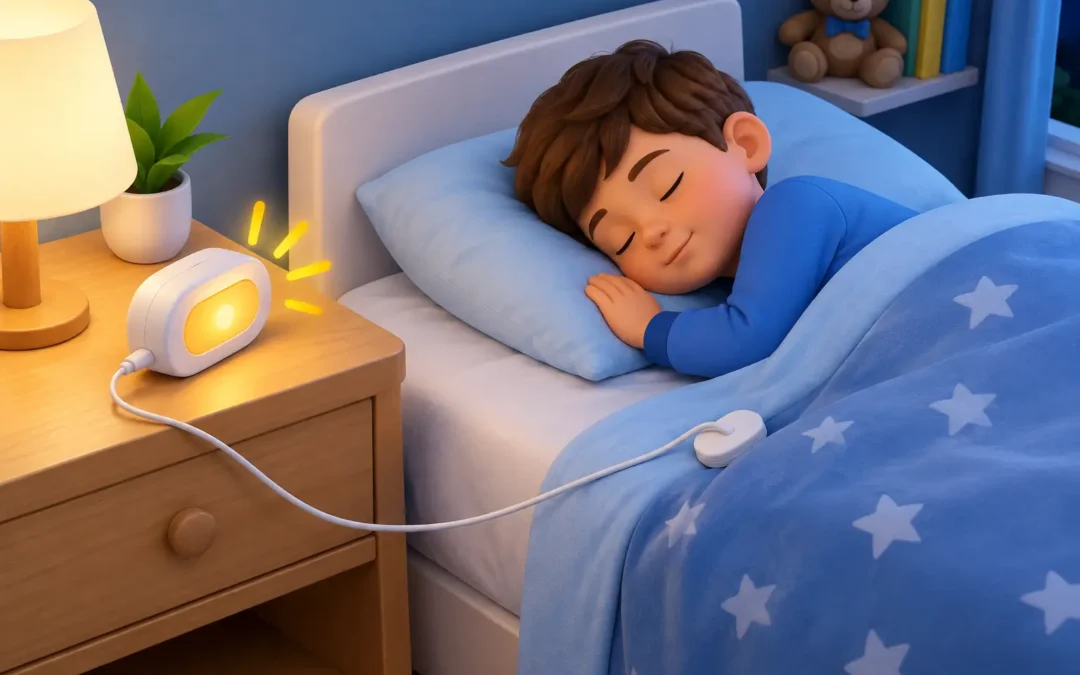
A wet bed at 2 am can make any parent question whether an alarm will simply add more broken sleep to an already difficult night. So, do alarms work for bedwetting? For many children, yes. Used consistently and with the right support, a bedwetting alarm is one of the most effective treatments for achieving lasting dry nights. But it is not a quick fix, and it is not the right approach for every family at every moment.
Alarm therapy works by helping the brain and bladder communicate more effectively during sleep. That learning takes time. Knowing what to expect can make the process feel more manageable for both you and your child.
Do alarms work for bedwetting long term?
Bedwetting alarms are an evidence-based first-line treatment for nocturnal enuresis, the clinical term for bedwetting during sleep in children aged five and over. Unlike products that only manage wetness for one night, an alarm aims to change the pattern behind it.
The alarm is triggered by the first small amount of urine. Over repeated nights, the child begins to connect the sensation of a full bladder with waking up, getting to the toilet, and eventually holding on until morning. The goal is not merely to wake to an alarm. It is for the child’s body to recognise the need to wee before wetting begins.
Research and clinical practice show that alarms can lead to long-term improvement, particularly when families can follow the routine for several weeks. Results vary, but many children who complete a course of alarm therapy achieve a run of dry nights and are less likely to return to regular bedwetting than with short-term measures alone.
That said, success is not measured by one dry night or one difficult week. Progress may appear as less wetting, later wetting, smaller wet patches, or a child beginning to wake more readily. These changes matter. They show that awareness is developing.
Why a bedwetting alarm works for some children
A child needs to be involved in the process, even if a parent initially does much of the waking and changing. Alarm therapy asks a lot of a family: interrupted sleep, consistent responses, and a calm routine when accidents happen. It tends to work best when the child wants to try it and the household has enough capacity to stay with the plan.
The right timing matters too. Starting during a period of major change, illness, exams, a new school, or a family crisis can make treatment harder. There is no failure in choosing protection and revisiting treatment later. Comfortable, discreet washable sleepwear and bedding can protect sleep, reduce laundry, and give a child confidence while the family decides what is realistic.
Children who sleep very deeply can still benefit from an alarm, but they may need an adult to wake with them at first. The sound alone is not the treatment. When the alarm activates, the child should be fully awakened, taken to the toilet to finish weeing if needed, and involved in resetting the system. This repeated sequence teaches the connection between bladder signals and waking.
A sensor that detects the first drops of urine is also more useful than one that activates only after a larger wet patch. Earlier feedback gives the brain a clearer opportunity to learn.
What a successful alarm routine looks like
Before bedtime, encourage your child to drink normally through the day and use the toilet just before sleep. Restricting fluids all day is not helpful and can contribute to constipation, which may worsen bladder symptoms. Avoid caffeinated drinks, particularly later in the day.
When the alarm sounds, keep the response brief and predictable. Wake your child properly, guide them to the toilet, help them change if necessary, reset the alarm, and return to bed. Try not to turn it into a long conversation or a stressful event. A sleepy child may not remember the first few wake-ups, so gentle parental support is often essential.
A simple progress record can make change visible when it is otherwise easy to miss. Note dry nights, alarm times, whether your child woke independently, and any factors such as constipation or illness. Connected treatment systems, including Pjama DryGuardians, can support this process with sensor-based data and personalised progress tracking. For families working with a continence clinician, shared records can also help guide care between appointments.
Praise effort rather than outcome. Your child cannot choose whether their bladder wakes them yet, but they can help reset the alarm, follow the routine, and keep trying. A sticker chart or small reward for these actions can be encouraging. Avoid rewards or consequences based solely on dry nights, as this can create pressure around something the child does not control.
How long does alarm therapy take?
Most families need to use an alarm consistently for several weeks, and some need longer. A four-week review is often useful: is the alarm being used every night, is the child waking more easily, and is wetting becoming less frequent or happening later? If there is no sign of progress, check the fit and placement of the sensor, the overnight routine, and whether another health factor may be involved.
Treatment is commonly continued until a child has achieved a sustained period of dry nights. Stopping after only a few good nights can make relapse more likely. If bedwetting returns after a successful course, a further period of alarm therapy can still help. Relapse is common and does not mean the previous progress was lost.
Some families see an early improvement, while others have several challenging weeks before the pattern shifts. Consistency is more valuable than perfection. A missed night during a holiday or illness does not erase the learning already taking place.
When alarms may not be the best first step
An alarm is not always the most suitable starting point. If your child has daytime wetting, urgent trips to the toilet, pain when weeing, repeated urinary infections, excessive thirst, constipation, snoring or breathing pauses during sleep, speak to a GP or continence professional. These signs may need assessment alongside, or before, alarm treatment.
It may also be better to delay an alarm if your child is distressed by the idea, if caregivers cannot reliably respond overnight, or if the family’s sleep is already severely affected. Protection for tonight can be the kindest practical choice while you prepare for treatment later.
For special occasions such as a school residential, sleepover, or holiday, some families discuss short-term medical options with a clinician. These can be useful in the right circumstances, but they work differently from an alarm and do not teach overnight bladder awareness. A clinician can help you weigh immediate confidence against longer-term treatment goals.
Questions families often ask
Will the alarm wake everyone else?
It may at first, particularly if your child is a deep sleeper. Positioning, prompt parental support, and a predictable response reduce disruption over time. The aim is for your child, rather than the whole household, to become the person who responds.
Is my child too old for a bedwetting alarm?
No. Bedwetting can affect older children, teenagers, and adults, and it deserves the same respectful, practical support at every age. The most relevant questions are whether the person is motivated, whether the routine is feasible, and whether any underlying symptoms need clinical assessment.
What if my child feels embarrassed?
Keep the language matter-of-fact. Bedwetting is common, and it is not caused by laziness or bad behaviour. Choose discreet equipment, protect the bed in advance, and make treatment a private family routine rather than a subject for discussion with siblings or visitors.
Dry nights rarely arrive because a child has been told to try harder. They come through the right support, repeated learning, and a plan that respects everyone’s sleep. If an alarm feels possible now, give it enough time to work. If it does not, protection and professional guidance can provide peace of mind until the next right step.