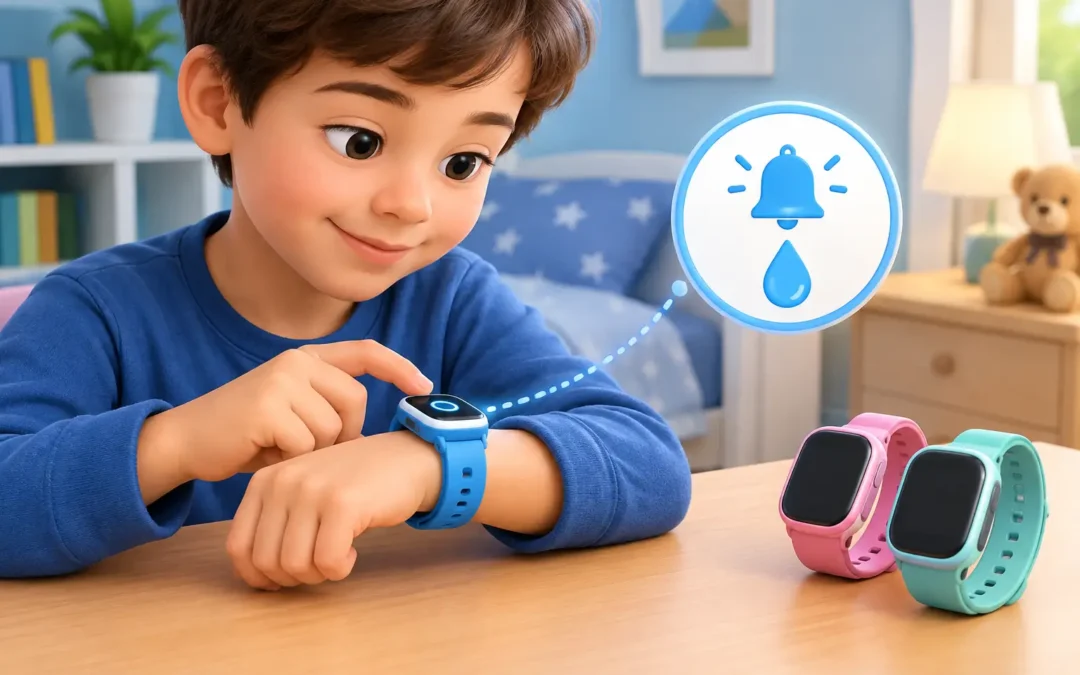
A reminder watch for daytime wetting can turn an easily missed bodily signal into a simple, private prompt: time for the toilet. For many children, daytime accidents are not about laziness, attention-seeking or a lack of effort. They may be so absorbed in school, play or travelling that they delay going until their bladder is already overfull.
A discreet watch cannot diagnose the cause of wetting or replace professional care when it is needed. It can, however, support one of the most useful daytime continence habits: regular, relaxed toilet visits before urgency takes over. Used consistently and without blame, it gives children a practical route towards more control, confidence and independence.
Why timed toilet visits can help
Children do not all recognise bladder signals in the same way. Some notice the first small feeling that they need the toilet. Others only register the urge when it feels sudden and urgent. Some develop a habit of holding on, crossing their legs, squatting, fidgeting or rushing at the last possible moment. This may happen because they do not want to leave a lesson, interrupt a game, use an unfamiliar school toilet or simply cannot identify the earlier signal yet.
A reminder watch creates a predictable rhythm. Rather than waiting for a crisis, the child visits the toilet at agreed intervals during the day. This can reduce bladder overfilling and hurried dashes to the loo. It also moves the conversation away from accidents and towards a skill the child can practise.
The aim is not to make a child go on command or to make them feel watched. The aim is to offer a neutral cue: pause, try the toilet, then return to the day. A quiet vibration or discreet alarm is often enough.
What to look for in a reminder watch for daytime wetting
The best watch is the one a child will comfortably wear and can use without drawing attention to themselves. For school-age children, simplicity is usually more valuable than a screen filled with settings.
Discreet alerts
Look for vibration, a gentle beep or the option to choose between the two. Vibration can be particularly useful in a classroom, during clubs or on public transport. Before relying on it at school, test whether the child can feel it through their sleeve and whether the selected setting is allowed under the school’s usual rules.
Flexible intervals
A watch should allow regular alerts that fit the child’s care plan. For some children, an initial reminder every two hours works well. Others may need a different schedule based on their age, fluid intake, school day and guidance from a continence professional. A device with adjustable intervals makes it easier to personalise the routine rather than forcing the child into a one-size-fits-all pattern.
Easy operation
Children need to be able to understand what the alert means and, where appropriate, confirm it themselves. Controls should be clear enough that a parent can set the schedule quickly and a child does not accidentally switch it off. A reliable battery and water-resistant design are practical advantages for busy family life.
A comfortable, age-appropriate design
A reminder watch should feel like an ordinary accessory, not medical equipment. A comfortable strap, a design the child likes and a watch that fits under a school jumper can make a meaningful difference. When a child feels comfortable wearing it, they are more likely to use it consistently.
Setting up a routine that works at school and home
Begin with an honest, matter-of-fact explanation. You might say: “This watch is here to help your body get regular toilet breaks. When it buzzes, you can go and try.” Keep the message calm. The watch is a tool, not a test of whether they have been good.
Plan the timing around real life. A reminder shortly after arriving at school, mid-morning, before lunch, mid-afternoon and before the journey home may be easier to follow than a schedule that repeatedly interrupts the same lesson. At home, build reminders around meals, screen time, outings and bedtime routines.
It helps to speak with the school in advance. The class teacher, pastoral lead or school nurse does not need intimate details. They do need to understand that the child may need prompt, unrestricted access to the toilet when the watch alerts. A simple agreed signal can protect privacy and prevent the child from having to explain themselves in front of classmates.
If a child is worried about missing learning, reassure them that a short, planned toilet break is often less disruptive than an urgent accident. A spare set of underwear and clothing in their school bag can also provide peace of mind while the new routine becomes familiar.
Make the toilet visit relaxed, not rushed
The alert is only the first step. Encourage the child to sit comfortably, take their time and empty their bladder without straining or rushing. Feet should be supported where possible, especially for younger children, as dangling legs can make it harder to relax. Boys who are struggling with daytime wetting may sometimes benefit from sitting down to wee, as this can support more complete emptying.
Avoid telling a child to “try harder” or repeatedly asking whether they need the toilet. Pressure can make a sensitive subject feel bigger. Instead, use practical language: “Your watch buzzed. Let’s take a toilet break.” Praise the routine rather than focusing only on dry days.
A small progress chart may help some children, especially if it tracks actions such as wearing the watch, responding to reminders and drinking regularly. It should never become a public scoreboard or a punishment system. Accidents are information. They can show that a reminder is too far apart, a toilet is difficult to access or there may be another factor worth discussing with a clinician.
Drinks, constipation and other pieces of the picture
A watch works best as one part of a wider daytime bladder routine. Children need regular fluids across the day. Reducing drinks too much may seem like an obvious way to prevent accidents, but concentrated urine can irritate the bladder and may worsen urgency for some children. Water is generally a sensible everyday choice, while caffeinated and fizzy drinks may aggravate symptoms in some children.
Constipation deserves attention too. A full bowel can press on the bladder, affect emptying and contribute to wetting or urgency. Hard stools, painful bowel movements, infrequent pooing and soiling can all be relevant, even if a child does not mention them. Addressing bowel habits with appropriate clinical advice can be an essential part of continence care.
It also helps to notice patterns without making every day feel like a medical project. Does wetting happen just after lunch, on the way home, during football training or when a child is deeply engaged in a favourite activity? A brief record of drinks, toilet trips, accidents and bowel movements can give a GP or continence professional useful information.
When to seek professional advice
Daytime wetting is common and treatable, but it should not be dismissed. Speak with a GP or continence specialist if wetting is new after a child has been dry, is frequent, causes distress, or does not improve with a consistent routine. Professional assessment is particularly valuable when there is pain or burning when passing urine, recurrent urinary infections, a weak or interrupted stream, straining, marked urgency, constipation, developmental concerns or both daytime and night-time symptoms.
Seek prompt medical advice if a child has new excessive thirst, passes much more urine than usual, loses weight, seems unwell, has fever or blood in their urine. These symptoms need assessment rather than a change to a watch schedule.
A clinician can help identify whether the pattern relates to bladder habits, constipation, infection, overactive bladder, incomplete emptying or another cause. They can also advise on the right interval between toilet visits and whether a structured continence programme is appropriate.
Give the routine time to become theirs
The first week with a reminder watch may feel unfamiliar. Children may ignore an alert, forget what it means or be reluctant to leave an activity. That does not mean the approach has failed. Gentle repetition, a school plan and a schedule that fits daily life can make the habit feel normal.
As confidence grows, some children begin responding to their own body’s earlier signals before the watch prompts them. That is progress worth noticing. The goal is not lifelong dependence on an alarm. It is a calmer day in which toileting feels ordinary, private and manageable – one well-timed break at a time.