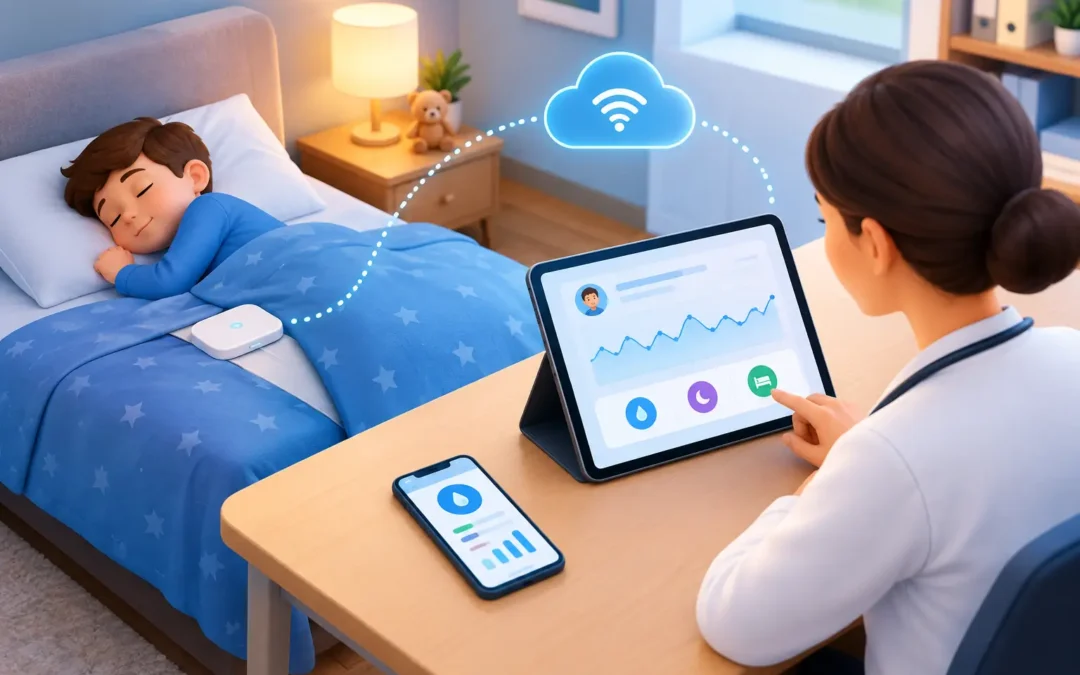
A family may have waited months for an enuresis appointment, then leave with an alarm, a set of instructions and a question that is harder to answer: what happens when treatment begins at home? Remote enuresis monitoring for clinics closes that gap. It gives clinicians a clearer view of progress between appointments while giving children and carers practical support at the point when routines are most likely to slip.
Bedwetting is common, manageable and never a child’s fault. Yet alarm therapy can be demanding in the first weeks. Sleep is interrupted, parents may be unsure whether the alarm was heard, and a single wet night can feel like lost progress. A connected care pathway turns those experiences into useful treatment information rather than a reason to stop.
Why clinic-led monitoring changes the care pathway
Traditional follow-up often relies on a family remembering several weeks of events and describing them in a short appointment. That account matters, but it can miss patterns: a child who wakes to an alarm but needs help changing, a sensor that is not making reliable contact, wetting that happens at a consistent time, or a family whose confidence is fading.
Remote monitoring creates a shared record of nights, alarms and responses. Instead of asking only, “Has it improved?”, the clinician can review what has happened over time and identify whether the treatment plan is being followed, whether it is working, or whether it needs adjusting. This supports more personalised care without asking families to become data experts.
The value is not simply more information. It is better-timed information. A brief clinical message after several difficult nights may prevent a family abandoning treatment just before an important improvement. Equally, a pattern suggesting that alarm therapy is unsuitable or poorly tolerated can be identified earlier, so the child is not left struggling with an approach that is not right for them.
Better follow-up without more clinic visits
For many services, enuresis follow-up competes with a wide range of paediatric continence needs. Face-to-face appointments remain valuable for assessment, complex presentations and sensitive conversations, but they are not always needed for every routine check-in.
A remote pathway can reserve appointments for decisions that genuinely need clinical time. Clinicians can review progress graphs before a scheduled contact, respond to predefined alerts, or arrange an earlier review when the data indicates a problem. Families avoid unnecessary travel and time away from school or work. The service gains a more consistent way to support a larger caseload.
This does not mean replacing clinical judgement with a dashboard. The data should prompt questions, not make decisions on its own. A wet night may reflect illness, disrupted sleep, a change in routine or an incomplete record. The child’s wellbeing, motivation and family circumstances still belong at the centre of every review.
What remote enuresis monitoring for clinics should capture
Useful monitoring is focused. If families are asked to record too much, the system becomes another task at bedtime. If the information is too limited, clinicians cannot act on it. The best approach captures the measures that shape treatment decisions and presents them in a form that can be reviewed quickly.
For alarm therapy, this commonly includes wet and dry nights, the timing of wetting where available, alarm activations, whether the child woke independently, and whether an adult needed to help. It should also allow families to record relevant context, such as illness, a sleepover, travel or a missed night of treatment.
Predictive systems can add a further layer. By detecting early moisture and activating before full voiding, they may help the child learn to respond earlier in the bladder-emptying process. The clinical record can then show not only whether nights were wet, but how the child’s response to treatment is developing.
A clear progress graph is often more useful than a long diary. It helps clinicians spot trends at a glance and helps families see that treatment is moving forward, even before every night is dry. That visual reassurance matters. Progress is rarely a straight line, particularly in the first few weeks.
Build in a four-week review point
A four-week evaluation gives the pathway structure. It is long enough to identify early patterns and short enough to address avoidable problems before frustration takes hold. The review should consider adherence, alarm response, practical set-up, the child’s motivation and changes in wet-night frequency or volume.
Some families will need coaching rather than a different treatment. They may need help placing a sensor correctly, preparing a quick night-time change, or agreeing who will respond when the alarm sounds. Others may need a clinician to review constipation, daytime bladder symptoms, fluid habits, sleep concerns or other factors that can affect outcomes.
The point is not to apply a single rule to every child. A child who is engaged and showing gradual change may benefit from continued support. A child experiencing significant distress, exhausted parents or repeated technical difficulties needs a different conversation. Remote data makes that distinction easier to see.
Design the pathway around real family life
Families will not use a platform consistently because it is technically impressive. They will use it when it makes an already difficult routine feel more manageable. Onboarding should therefore be simple, calm and specific.
Before treatment starts, explain what the child can expect on the first nights, what the parent’s role is, and what counts as a normal early challenge. Give practical guidance for testing equipment, responding to an alarm and recording a night. Use language that protects dignity: this is a treatment routine, not a test the child can fail.
It also helps to agree how the clinic will communicate. Families should know when data is reviewed, which changes require them to get in touch, and when they can expect a response. A portal that appears to offer constant monitoring can create anxiety if the service does not have capacity to provide it. Clear expectations are safer and more compassionate than vague promises.
For children, independence should increase gradually. At first, an adult may need to wake with them and support the routine. Over time, the aim may be for the child to respond, reset the system and return to bed with less help. Protection products can reduce the disruption of wet nights during this learning period, helping families protect bedding, sleep and confidence while treatment continues.
Make clinical data useful, secure and proportionate
A successful programme needs more than a family-facing app. Clinicians need a secure portal that presents information in a consistent format, supports case review and fits existing governance requirements. Access controls, appropriate consent processes and clear data-retention policies are fundamental, particularly when records relate to children.
Services should also decide who reviews the information and how often. A continence nurse may manage routine checks and education, with escalation to a prescribing clinician or paediatric specialist when symptoms, safeguarding concerns or treatment complexity require it. Defined responsibilities prevent alerts from becoming invisible in a busy inbox.
There is a trade-off between automation and personal contact. Automated reminders can improve completion of diaries and reinforce routines, but they should not sound blaming after a wet night. Standard messages need a compassionate tone and an easy route to human support. Families must feel that the data is helping their child receive care, not judging their effort.
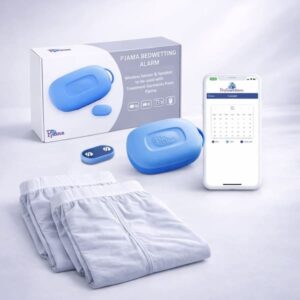
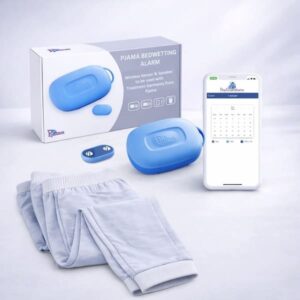
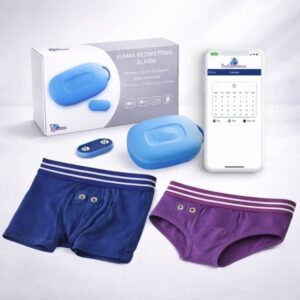
Pjama’s connected DryGuardians approach illustrates how treatment garments, sensors, a family app and clinician-facing progress information can support one shared pathway. The practical advantage is continuity: the same treatment events that guide a parent at home can also inform a more meaningful clinical review.
Start with a small, measurable clinic pilot
Introducing remote monitoring works best when the first pathway is deliberately narrow. Start with children who have been assessed for alarm therapy and whose families are willing and able to use the system. Define what success looks like before launch: improved treatment completion, faster identification of set-up issues, fewer routine appointments, better family-reported confidence, or clearer outcome data.
Train the clinical team on both the technology and the conversation around it. They need to understand what a graph can show, what it cannot show, and how to talk about incomplete records without creating shame. A family who has not logged three nights may be overwhelmed, unwell or simply unclear about the process. Curiosity is more useful than criticism.
Review the pilot with families as well as staff. Ask whether the routine was understandable, whether notifications were helpful, and whether remote support changed how confident they felt. Then refine the pathway before extending it across the service.
The most valuable remote monitoring programme is not the one with the most data points. It is the one that helps a child feel supported through difficult nights, helps parents know what to do next, and gives clinicians the timely information to make care kinder, more focused and more effective.